


Oops! Something went wrong while submitting the form.

December 11, 2025


By Mariana Servidio de Castro and Alexandra Pittman, ImpactMapper
Ending violence against women and girls (EVAWG) requires transforming people and systems that have deeply rooted discriminations and biases. Social norms, institutional cultures, and policy frameworks are complex structures that often take years to change, and building programmes that promote lasting gains that end violence against women and girls is critical. Just as crucial is understanding how gains are and can be sustained, so we can strengthen the pathways that allow progress to continue over time.
The UN and the EU launched Spotlight Initiative in 2017 - the largest global, targeted effort to eliminate all forms of VAWG. The Initiative's first generation of programmes was implemented from 2017 to 2023 in 26 country programmes, five regional programmes, one thematic regional programme, and two civil society grant-giving programmes. Its whole-of-society, whole-of-government approach placed EVAWG at the center of national development priorities and equipped communities to address violence against women and girls (VAWG) in their own contexts. The model strengthened laws and policies, reinforced institutions and data systems, promoted gender-equitable norms, supported quality services for survivors, and supported women’s and feminist movements and organizations. As a central part of its model and theory of change, Spotlight Initiative invested in multi-stakeholder partnerships across government, civil society, and duty-bearers, with a particular emphasis on engaging civil society and women’s movements in order to drive sustainable, transformative results and expand civic space in the countries where it worked.
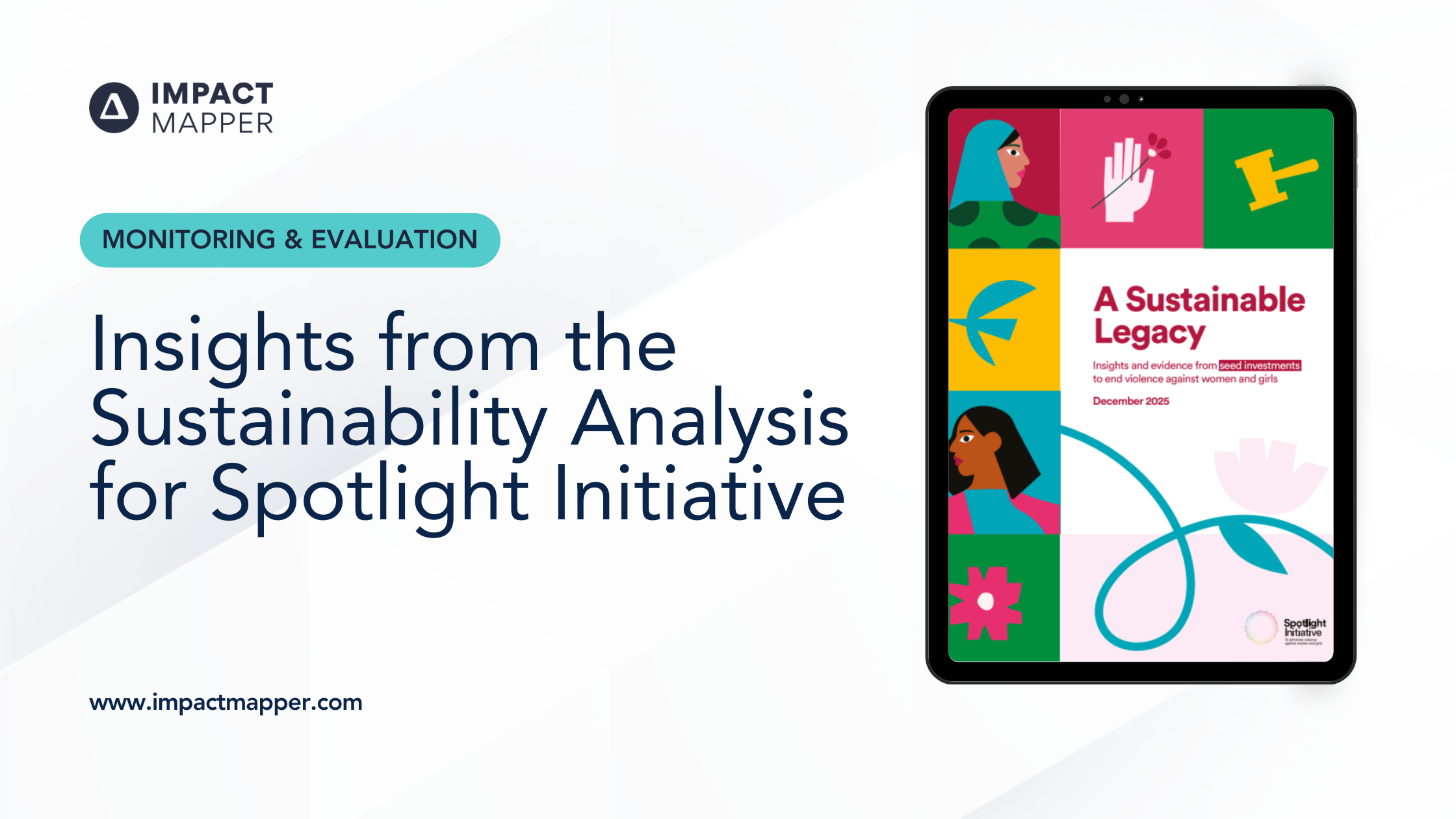
As Spotlight Initiative concluded its first phase, it was important to understand: To what extent did these achievements last, and what allowed them to endure? As such, the Initiative commissioned the development of Spotlight Initiative’s sustainability report, A Sustainable Legacy. Insights and Evidence from Seed Investments to End Violence Against Women! to assess sustained achievements and understand what drives lasting impact in efforts to EVAWG. Here are three key lessons from this assessment:
Engaging in iterative analysis and qualitative coding to surface findings and lessons
There was a significant amount of qualitative data analyzed for this assessment from more than a hundred stakeholders, including UN colleagues, EU representatives, government actors, and civil society organizations from across 26 country programmes and five regional programmes. Interviews, reports, and background research provided a wealth of evidence on sustained achievements and became pathways to understanding how lasting change unfolded on the ground. The methodology was intentionally iterative: drawn on appreciative inquiry principles, interviewers were encouraged to explore strengths, enabling factors, and promising practices that could explain why results lasted. Each finding or insight from an interview then prompted a closer look at documents, online research and additional validation with stakeholders. What made the analysis process meaningful was this combination of structure and openness, as we applied a rigorous method of inductive qualitative coding that allowed unexpected findings to surface, in addition to a structured taxonomy of information. This process allowed us to surface a diversity of trends and develop a wealth of short and three in-depth case studies, illustrating concrete examples of sustained achievements and how they happened. Below, we share some of the key findings from the report.
Key findings from the Spotlight Initiative Sustainability Report
One of the key findings was that sustained results were present in nearly every programme and across all Spotlight Initiative six pillars. Facilitated by Spotlight Initiative's whole-of-society, whole-of-government approach, these sustainable achievements ranged from strengthened laws and policies, reinforced institutions’ ability to prevent and respond to VAWG, more coordinated survivor-centered services, active women’s rights networks, to improved data systems that continued to inform national planning.
Along with three in-depth case studies, we wrote and documented more than 50 examples across pillars that shared insights on the key conditions and strategies that enabled sustained achievements (sustainability-enabling factors, as we called them). It became clear that these factors included a combination of Spotlight Initiative design features, implementation practices, and efforts that extended beyond the programme’s formal conclusion. By simultaneously engaging policymakers, service providers, civil society actors, traditional leaders, and communities, the Initiative laid the foundation for sustainability drivers to flourish into a system creating an enabling environment in which EVAWG progress could continue to grow even after the programme had ended. Some particularly influential sustainability-enabling factors included:
Institutionalization stood out across contexts. When protocols, coordination mechanisms, or training materials became part of government or institutional systems, they continued strengthening institutions, services, and prevention initiatives organically beyond the Initiative period. This also often included engaging civil society as key partners to implement and sustain the programme activities. Capacity strengthening, especially when grounded in rights-based and survivor-centred approaches, left a deep imprint on institutions and individuals. Many stakeholders described how the Initiative reshaped the way justice, health, education, and social services professionals approached EVAWG work, and were solidified in institutions through practice and norm changes. Government funding also proved central to the continuity of results. Where governments assumed funding responsibilities, such as for EVAWG trainings or building or strengthening the service infrastructure, Spotlight Initiative programmes became sustainable models rather than project-based interventions.
The role of civil society was another powerful thread running through the findings. When meaningfully engaged, women’s rights organizations, youth networks, and feminist movements maintained gains and momentum through advocacy, coalition building, and community-led initiatives. Their leadership was especially vital in contexts where political transitions or backlash threatened gains, demonstrating the importance of well-resourced, long-standing feminist organizing in countries.
Despite these strengths, challenges also surfaced. Funding gaps, political pushback, limited institutional capacities, and uneven multi-stakeholder coordination created fragilities across several contexts. These realities revealed the pressures that EVAWG efforts face when political will wavers or resources shrink. They also highlighted the importance of planning for sustainability early, building resilient systems, and supporting feminist civil society actors who can advocate for accountability even during periods of regression.
Moving forward
Taken together, the findings from the Spotlight Initiative Sustainability Report reveal a clear message for future programming: transforming the systems that sustain VAWG is possible when change is owned locally, shared across institutions, and supported over time. The sustained achievements documented across programmes show that progress continues when the right actors, structures, and investments remain in place. These insights provide a roadmap for building on what works and ensuring that momentum toward EVAWG continues to accelerate.