

Oops! Something went wrong while submitting the form.

June 24, 2026


Written by Alexandra Pittman, Ph.D., ImpactMapper Founder and CEO
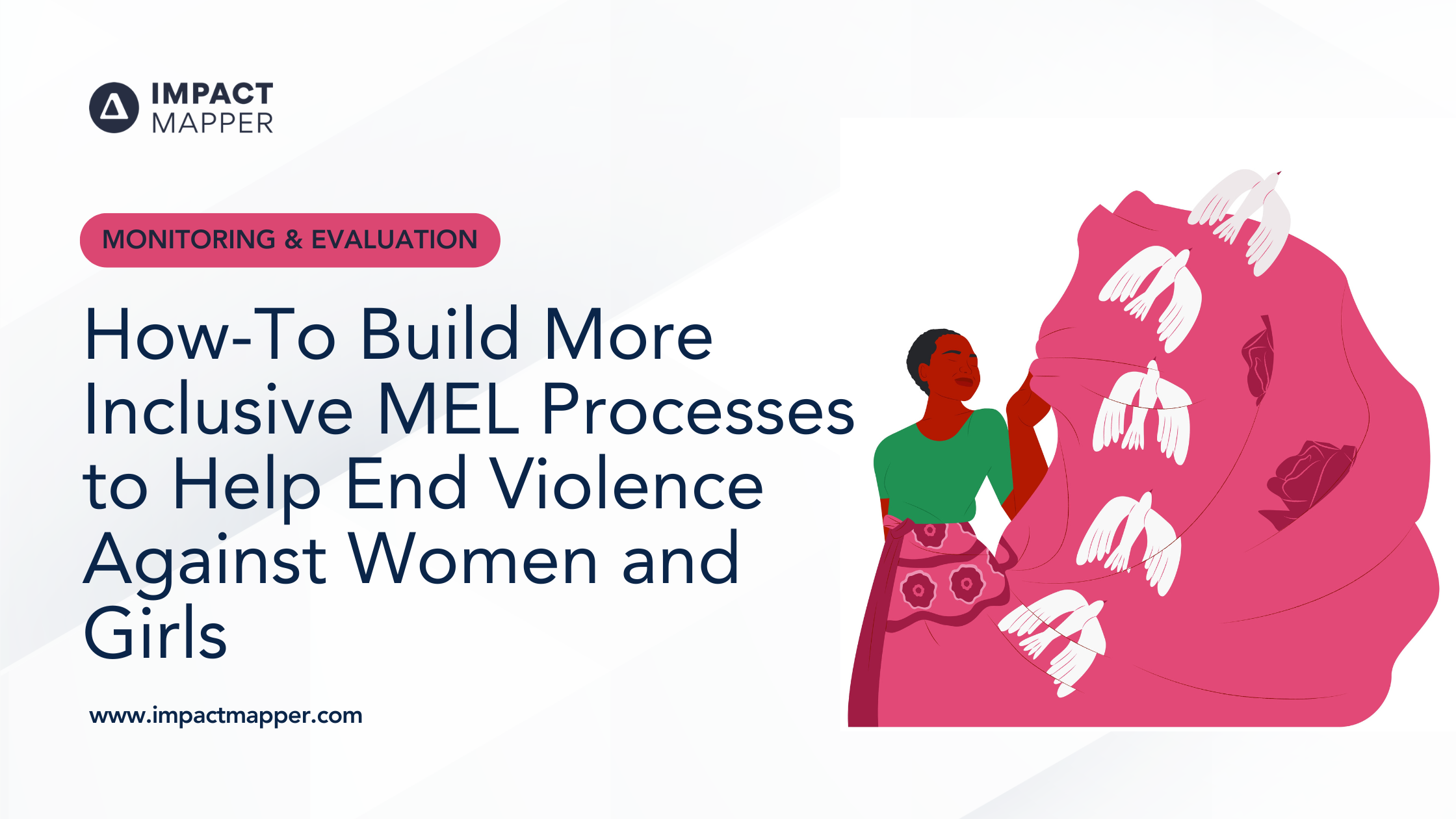
Ending Violence Against Women and Girls (EVAWG) is a more pressing issue now than ever.
The past few years have seen significant backsliding in terms of gender equitable rights, increasing threats to women and human rights defenders, as well as decreased funding for EVAWG advocates and organizations. It is in this context that Spotlight Initiative launched its second generation of programmes in 2024, building on the achievements and lessons of its first phase, which comprised 34 programmes and represented the largest global investment dedicated to ending violence against women and girls at the time, with EUR 500 million in funding.
Drawing on the recommendations of the final evaluation of Spotlight Initiative’s first phase, Spotlight Initiative has worked to strengthen and adapt its programming for this next phase. This has included revising the global results framework to reflect lessons learned and emerging priorities, and to enable the Initiative to better capture meaningful change across diverse contexts.
The following blog highlights some key methodological reflections on the process of refining the the new Initiative-wide results framework based on my experience being part of the Expert Consultant team along with my colleagues, Shelah Bloom and Mildred Mushunje and the Spotlight Initiative Monitoring and Evaluation team, Natalie Raaber, Michelle Unda, and Briana Yerbury.
Our entire methodological roadmap was underpinned by our strong joint commitment to an inclusive and participatory process. This would ensure a strong results framework that responded to a diverse set of community, national, regional, and global needs. We aimed to do this through:
In crafting the revised global results framework, we drew upon the feedback and expertise of a broad spectrum of civil society organizations (CSOs) and activists, including past and present partners, and the wider community of CSOs focused on eradicating VAWG. In practice, CSO feedback informed the design of the initial terms of reference, the literature review, and indicator reviews, amongst many other elements. A CSO representative, Mildred Mushunje, sat alongside myself and Shelah Bloom as part of the Expert Consultant team, guiding the entire revision process, in addition to several CSOs who sat on the overarching reference group (described further below). Additionally, the revision process and the outcome (the new Initiative-wide results framework) process aligned with the demands of civil society as articulated in the Co-Design Principles to guide the second generation of Spotlight Initiative programmes. This co-design process emphasized shared decision-making and feminist values.
The RFR - RG was composed of experts representing a wide range of Spotlight Initiative stakeholders, including civil society members who provided advice on all materials produced. Continuous feedback and transparency was key to this process – with all comments and suggestions throughout the process documented in a response log, which was shared back with stakeholders for discussion and accountability.
This process started with an in-depth literature review and detailed assessment of strengths and weaknesses of the past indicator framework. This desk research analysis phase was followed by an online survey sent to Spotlight Initiative stakeholders diverse civil society members (national, regional, and global VAWG experts) and key informant interviews with stakeholders from the UN, civil society, and academia to better understand their past experiences tracking EVAWG work and gather feedback for the revision process. All of this data was analyzed and resulted in a report and a list of suggested outcomes, outputs, and indicators. A final in-person meeting in June 2025 was held to review the proposed changes to the new results framework. This led to civil society and RFR-RG review and refinement until the final product was produced and released.
This participatory research and revision process enabled us to make methodological and design choices that strengthened the overall results framework. Concretely this meant:
Only country level indicators were provided in Spotlight Initiative 1.0 and they were not fit for effective measurement of regional programmes’ distinctive outcomes and impact. As such, we developed both country and regional programme indicators for greater specificity in measurement in the revised Results Framework. This allows Spotlight Initiative to aggregate signature results globally and also at national and regional levels, offering flexibility for measuring context-specific results. Having reliable aggregable data helps paint a clearer picture of EVAWG work at the global, regional, and country levels.
The former Theory of Change had six outcomes and the updated Theory of Change was simplified into four outcomes (A. Laws and Policies, Institutions, and Data; B. Prevention; C. Response, and D. Women’s Movement). This created a lighter foundation to revise the results framework for measurement. From there, the evaluation team focused on aligning and strengthening the indicators. Listening to feedback from Spotlight Initiative country and regional programme staff, the results revision team and RFR-RG chose to considerably reduce the number of required indicators and established a small set of core mandatory indicators and all other indicators were optional. Core indicators allow the Initiative to capture progress across the comprehensive model, balancing global aggregation with contextual flexibility. This means there is the ability to understand how country and regional programmes are performing as connected to the Theory of Change at a global level. After the refinement process of the core and optional indicators, methodological notes were written to support accurate data collection. The methodological notes are critical in ensuring shared definitions and measurements of key concepts in the indicators, so that data collection and analysis across contexts is the same and can be reliably compared at the global level.
Spotlight Initiative needed to be able to demonstrate progressive changes toward long-term outcomes that will likely not be possible to achieve within the timeframe of a country or regional programme (which tend to be 3-4 years). Some examples of outcomes that take years or decades of collective effort include passing a law or policy, strengthening an existing administrative data system, transforming norms and attitudes, changing behavior, etc. Given this reality, the revised results framework includes indicators that help track progress steps for a law reform to actually occur. For example, a core outcome indicator that tracks progress on national VAWG data systems includes the following. Progress is made towards instituting a national system – coordinated across key sectors – to collect and share administrative data on violence against women and girls and harmful practices.
Another important addition was to move beyond only tracking the number of laws and/or policies passed or strengthened and to follow through to capture the law’s or policy's actual implementation. For example, the new indicator is: Number (and type) of newly established accountability mechanisms to monitor and report on the implementation of laws and policies to end violence against women and girls and harmful practices, and advance gender equality
In summary, the revisions improved the clarity, measurability, and the ability to capture meaningful change across diverse contexts. The revised framework sharpened indicator language and strengthened accompanying methodological notes, including expanded guidance on disaggregation. New indicators were introduced to better capture the Initiative’s support to feminist movement-building and collective civil society action; its work in humanitarian and crisis settings; and its contributions to women’s economic rights and empowerment. The updated framework also places greater emphasis on tracking the longer-term impact and sustainability of the Initiative’s work, while introducing both country- and regional-level indicators to better reflect the breadth of programming contexts. In addition, for the first time, the new global results framework incorporates operational and collaboration metrics (the WOW metrics) designed to capture Spotlight Initiative’s contribution to UN Reform, including strengthened inter-agency coordination and joint programming.
As we launch the new Results Framework, we are driven by Spotlight Initiative’s and ImpactMapper’s collective goal to model inclusive indicator design processes. As an added benefit, while the framework was developed for Spotlight Initiative programmes, these indicators can be used and adapted by anyone in the EVAWG sector to track change in their programmes. We believe that due to the Initiative's comprehensive approach across laws and policies, data systems, prevention, response and CSO and WRO engagement, there is something here for everyone working in the EVAWG sector! We are pleased to share this wide array of ready-made tools, indicators, and methodological notes that can support more inclusive and participatory monitoring and evaluation processes and EVAWG programmes at large.
Check out the full Results Framework, Indicators and corresponding Methodological Notes