
Oops! Something went wrong while submitting the form.

October 5, 2026


Written by ImpactMapper Team
How can we build an evidence base for impact investment in Native American communities?
This was the question that Great Plains Housing Initiative (GPHI) came to the ImpactMapper team to explore together.
GPHI is a Native-led social enterprise housing developer dedicated to increasing housing opportunities for Native people through innovative and sustainable development and finance strategies. GPHI also manages the Native Impact Fund, a Native-led secondary market that expands the lending capacity of Native CDFIs by purchasing performing housing loans and recycling capital back into Native communities.
From the outset, GPHI has placed a strong emphasis on data and learning, both to document its model and share lessons with partners and investors. GPHI wanted an impact measurement approach that could evolve alongside its work—a practical system to track the financial performance of its investments and housing projects, understand outcomes, learn from partners and communities, and build an evidence base to strengthen its work over time.
ImpactMapper partnered with GPHI to develop this approach. For ImpactMapper, the partnership also represented an exciting opportunity to bring our impact measurement approach into a new context—our first engagement with a Native-led housing organization and an impact investment model of this kind.
First, we worked with the GPHI team through a participatory workshop to surface the central impact story. We explored what makes GPHI's Native-led approach distinctive, the barriers it seeks to address, the changes it hopes to contribute to through financing, housing development, and technical assistance, and what evidence would demonstrate progress toward those outcomes.
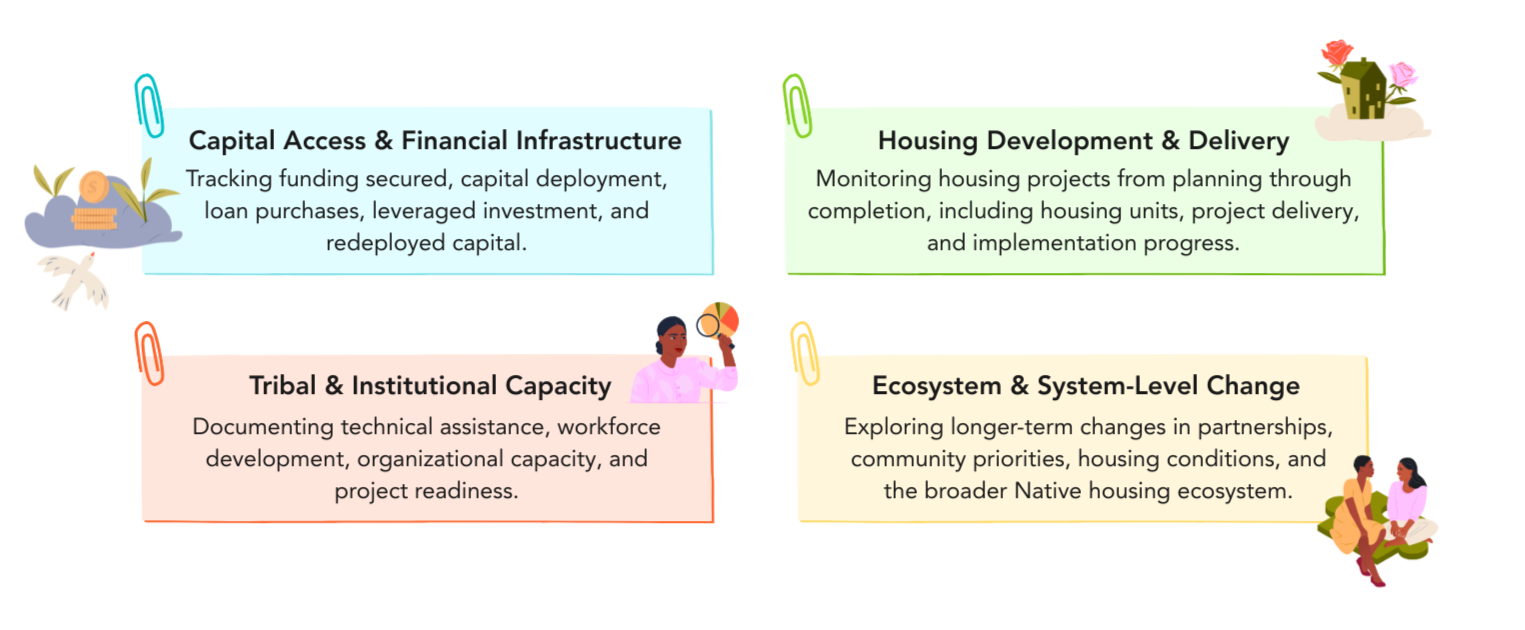
From these conversations, we developed an impact narrative—a mini Theory of Change—organized around four outcome areas: Capital Access & Financial Infrastructure, Housing Development & Delivery, Tribal & Institutional Capacity, and Ecosystem & System-Level Change. Together, these areas capture the changes GPHI seeks to contribute to through its financing and housing work and provide the foundation for measuring progress over time.
We then translated the impact narrative into an impact framework with indicators, learning questions, and a practical reporting system designed to support internal tracking, investor reporting, partner engagement, and organizational learning, while keeping reporting meaningful and minimizing burden for both GPHI and its partners.
The reporting approach combines quarterly internal reporting, lightweight partner reporting, annual strategic reflection, and periodic evaluation modules, recognizing that financial performance, housing outcomes, organizational capacity, and broader community outcomes unfold on different timelines.
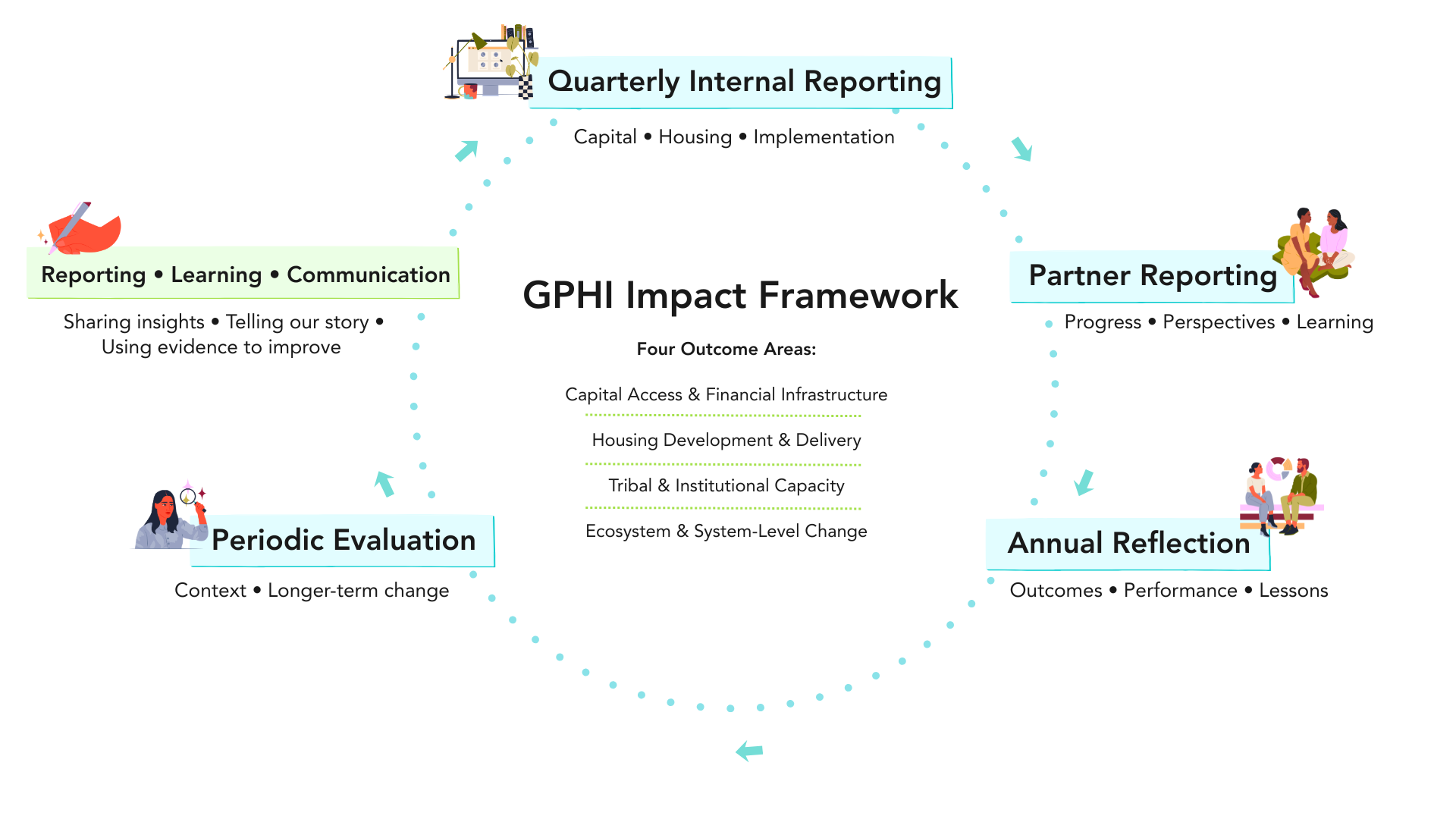
In addition to quantitative indicators, the reporting process includes opportunities for partners to share stories of change, implementation updates, challenges, technical assistance needs, and lessons learned.
GPHI has adopted ImpactMapper's software to bring all of this information together in one place. Partners share updates through simple digital reporting forms, and GPHI can track indicators alongside the stories and lessons partners report, analyzing trends across projects and building a consistent record of partner perspectives over time.
As GPHI continues its housing development and investment work and strengthens its relationships with investors, CDFIs, and Native housing organizations, the framework provides a way to understand financial performance alongside the experiences, relationships, and learning that shape housing development.
Ultimately, this gives GPHI a richer picture of how its model is working in practice—not only where capital is flowing and what is being built, but what partners and communities are experiencing along the way. As GPHI's work evolves, the framework can evolve with it, helping ensure that its growing evidence base remains grounded in the communities and organizations at the heart of its work.